

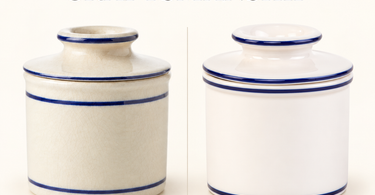
When shoppers compare a new bone china butter crock with glass, marble, stoneware or silicone, the material is more than a style choice. It affects opacity, weight, rigidity, cleaning, how securely the bell sits in the base and how the crock feels during everyday use.
After more than 30 years devoted to the French butter-keeping tradition, Butter Bell Company uses a proprietary clay blend called new bone china for every Butter Bell® Crock. It gives us the balance we want: a dense ceramic body, a smooth glazed food-contact surface, comfortable handling and enough refinement for detailed shapes, colors and finishes.
Here is how a French butter keeper works, what each common material brings to the countertop and why new bone china remains our choice.
How a Butter Crock Works
A butter crock—also called a French butter keeper or beurrier—is a two-piece vessel. Softened butter is packed firmly into the bell-shaped lid. About 1/3 cup of cold water goes into the base. When the bell is inverted into the base, the water surrounds the opening and creates a seal that limits the butter’s exposure to air while keeping it ready to spread.
A standard Butter Bell® Crock holds one stick of butter, or 1/2 cup (125 grams). For best results, change the water every two to three days, keep the crock away from direct sunlight and heat, and use it in a room around 68–72°F (20–22°C). With proper care, it is designed to keep real butter fresh, soft and spreadable for up to two to three weeks, although results vary with room temperature, butter type and handling.
New to French butter keepers? Follow our step-by-step instructions: How to Use a Butter Bell® Crock
Why Butter Crock Material Matters
- Opacity. Butter quality is best protected from direct light. An opaque crock shields the butter, while a clear vessel leaves it exposed to the room.
- A smooth food-contact surface. Butter and water should meet a fully glazed, nonporous surface that rinses clean and does not readily absorb fats, odors or moisture.
- Rigidity and fit. The lid and water reservoir need to hold their shape so the bell seats consistently and the water can surround its opening.
- Weight and grip. A crock is lifted, turned and replaced many times each week. The material should feel stable without becoming cumbersome.
- Cleaning and care. Water is refreshed frequently, and the crock is washed regularly. Smooth contours and clear care instructions make that routine easier.
- Durability. Every material has limits. A useful comparison considers chipping, cracking, flexing, surface wear and the care a material requires—not appearance alone.
Why Butter Bell® Crocks Use New Bone China
New bone china is a unique high-fired ceramic clay blend. Unlike traditional and more delicate bone china, the Butter Bell crock formulation contains no animal bone ash. It is fired at approximately 2,200°F to create the dense, refined body used across our collections.
- Opaque by design. The crock protects the butter from direct light while adding color and character to the countertop.
- Smooth glazed surfaces. The food-contact areas are sealed with glaze for a nonporous surface that is easy to rinse and clean.
- Refined strength without unnecessary bulk. New bone china allows the bell to feel substantial and balanced while remaining comfortable to lift with one hand.
- Lead- and cadmium-free. Butter Bell® Crocks are made for everyday food contact and are tested to meet our material standards.
- Dishwasher safe. Current Butter Bell® Crocks are dishwasher safe. For special decorative or metallic finishes, follow the care directions supplied with the specific collection.
- Detailed design. The material holds crisp relief, painted banding, reactive glazes and decorative finishes, allowing function and design to live in the same piece.
The honest tradeoff is the same one shared by ceramic dinnerware: a new bone china crock can break if it is dropped onto a hard surface. That is why thoughtful handling—and protective packaging—still matter.
Ceramic vs. Glass vs. Marble vs. Silicone Butter Crocks
No material is perfect for every household. The useful question is which tradeoffs fit a water-seal butter crock that will be handled and washed often.
| Material | Everyday advantages | Considerations |
|---|---|---|
| New bone china | Opaque, rigid, smooth glazed surface, refined detail and balanced handling. | Ceramic can break when dropped; special finishes may have collection-specific care. |
| Stoneware and other ceramics | Opaque, rigid and available in many handmade or commercial styles. | Wall thickness, weight, glaze coverage, finish and fit vary by maker. |
| Glass | Easy to see the water level and butter remaining; smooth surface. | Transparent walls expose butter to light; wet glass can be slippery; thinner pieces can feel fragile, while thicker glass adds bulk. |
| Marble | Opaque, naturally patterned and visually substantial. | Heavy for its size; natural stone can chip and requires care appropriate to its finish and sealant. Veining varies from piece to piece. More prone to absorb odors. |
| Silicone | Lightweight, flexible and resistant to shattering. | Flexibility changes how the lid grips and seats; molded textures and rim details require thorough cleaning. Is not recommended for this water seal method of storing butter due to mold concerns with silicone. |
| Low-cost ceramic copies | Often inexpensive and visually similar in online photos. | Capacity, glaze quality, lid fit, packaging, instructions, quality control and replacement support can vary. Much more fragile than other choices |
Glass Butter Crocks

Clear glass displays the butter and water—but it also allows light to reach the butter.
Glass is smooth and easy to inspect, but transparency is the central tradeoff. It allows light to reach the butter and makes water spots more visible. Construction matters: thin glass reduces weight but may feel delicate, while thick glass adds bulk. A wet glass crock lid may also be harder to grip securely.
Marble Butter Crocks

Marble is naturally distinctive, but it is substantially heavier and requires stone-specific care.
Marble offers opacity and one-of-a-kind veining, but it is heavy for a small vessel. As a natural stone, its performance depends on the specific stone, finish and sealant. Owners should follow the maker’s cleaning directions, avoid harsh or acidic cleaners unless approved, and watch for chips or cracks that could interfere with the water reservoir. Marble can absorb odors more easily than vitreous ceramic models.
Silicone Butter Crocks

Silicone is light and shatter-resistant, but it does not have the rigid feel of ceramic.
Silicone is lightweight and flexible, qualities that are useful in many kitchen tools. In a butter crock, however, flexibility changes the experience: the lid can feel less stable in the hand and molded textures or rim details deserve careful cleaning. Buyers should also confirm that the design provides a consistent water seal and clear care instructions. Mold can develop on silicone more quickly.
Packaging, Instructions and Product Support.
Material is only part of product quality. A two-piece ceramic crock should arrive in packaging designed to protect both the base and the bell. It should also include clear instructions explaining how much water to use, how to pack the butter and how often to refresh the water.
Butter Bell® Crock packaging is designed around the product’s ceramic construction, and each crock is supported by Butter Bell customer service. Purchases from authorized sellers are also covered by a two-year limited warranty against faulty workmanship or materials when the product is used according to its care instructions.
Warranty details: Butter Bell Return and Warranty Policy
What to Check Before Buying a Butter Crock
- Usable capacity. Confirm what the bell actually holds. A standard Butter Bell® Crock is designed for one standard stick of butter.
- Water reservoir depth. The base should hold enough water to surround the bell opening without overflowing when the lid is seated.
- Food-contact finish. Look for smooth, complete coverage on the surfaces that touch butter and water.
- Lid fit and stability. The bell should seat consistently in the base. Small variations can occur in ceramic production, but the two pieces must still create the intended water seal.
- Grip and weight. Consider how the lid feels when lifted with one hand, including when your hands are damp.
- Cleaning instructions. Confirm whether the material and decorative finish are dishwasher safe and whether special cleaners should be avoided.
- Packaging and support. Look for protective packaging, clear use directions, an identifiable manufacturer and a warranty or replacement process.
Frequently Asked Questions
Is new bone china ceramic?
Yes. New bone china is a type of high-fired proprietary clay blend that is durable and craze resistant. The Butter Bell crock's ceramic formulation is made without animal bone ash and is finished with a smooth glaze on the food-contact surfaces.
Is a ceramic butter crock better than a glass butter crock?
It depends on what you value. An opaque ceramic butter crock shields butter from direct light and provides a rigid, substantial feel, and provides a safer way to keep the water cool and butter fresh. Glass lets you see the contents but also exposes them to light and can be slippery when wet. If light can penetrate the glass exterior, the butter can oxidize faster.
How much butter fits in a Butter Bell® Crock?
The original-size Butter Bell® Crock holds one standard stick: 1/2 cup or 125 grams. The smaller Petit holds approximately 2.5 tablespoons.
How often should I change the water?
Replace the water with fresh cold water every two to three days. Keep the crock away from direct sunlight, the stove and other heat sources.
Can a Butter Bell® Crock go in the dishwasher?
Yes, current Butter Bell® Crocks are dishwasher safe. Check the care directions for the individual collection, particularly pieces with decorative or metallic finishes.
What if my kitchen is warmer than 72°F?
Move the crock to the coolest part of the kitchen, away from sunlight and appliances. In very warm conditions, add a small ice chips to the water or refrigerate the crock without water until the room cools.
The Bottom Line
Glass, marble, stoneware, silicone and other ceramic butter crocks can all hold butter, but they do not feel or perform the same way. Opacity, rigidity, glaze quality, weight, cleaning, fit, packaging and support shape the experience long after the product photo is forgotten.
New bone china brings those priorities together in one clay blend: an opaque ceramic body, smooth glazed food-contact surfaces, refined strength, comfortable handling and the ability to carry the detailed designs Butter Bell® Crocks are known for.
Ready to find the right Butter Bell® Crock for your kitchen? Explore all Butter Bell® Crocks
